Expanding into the Netherlands from Singapore: an honest test of EOR or your own entity
A Dutch BV is quick to set up, but employing through it means taking on sick pay for up to two years, court or UWV approval for dismissals and strict fixed-term rules. Here is how to decide.
This article was written by Safeguard Global and is published as partner content. It is general information, not legal or tax advice.
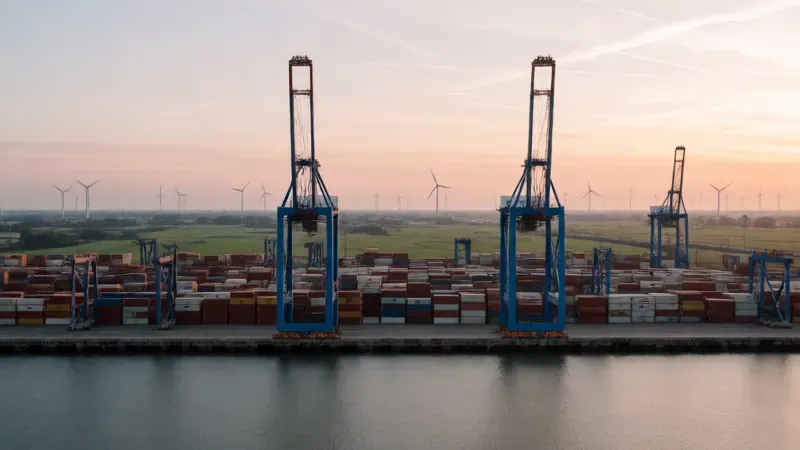
On paper, the Netherlands is one of Singapore's biggest investment destinations. Singaporean direct investment in the Dutch market totalled roughly $80.6 billion USD at the end of 2024, 6.2% of the total held abroad (Singapore Department of Statistics, converted at October 2026 rates). Part of that figure reflects holding structures rather than operating businesses, but the Dutch market has also become a genuine European base for Singaporean firms in logistics, maritime, agrifood, and technology, helped by the Port of Rotterdam, Schiphol, and an English-speaking workforce.
The Netherlands also ranks among the easiest places in Europe to incorporate. A Dutch private limited company (BV) can be set up quickly, with no meaningful minimum share capital. So the question many Singaporean finance teams ask is a fair one: why use an Employer of Record at all?
Here is an honest test.
What does it actually take to employ through your own BV?
Incorporation is the easy part. Employing people through the BV means registering as an employer with the Dutch tax authority, running monthly payroll tax and social security returns, and administering the obligations that make Dutch employment distinctive.
The biggest of these is sickness. A Dutch employer must generally continue paying at least 70% of a sick employee's salary for up to 2 years, and must manage a structured reintegration process with an occupational health provider throughout. A single long-term absence in a small team can become one of the largest costs the business carries, which is why many employers buy specialist insurance.
Then there is the annual holiday allowance of at least 8% of salary, statutory holidays of 4 times the weekly working hours, and a pension that is not universally mandatory but is so common, and in some sectors compulsory, that an offer without one reads as weak.
How hard is it to end employment?
Harder than in Singapore. A Dutch employer cannot dismiss unilaterally in the way a Singaporean employer can. Dismissals for economic reasons or long-term incapacity need permission from the Employee Insurance Agency (UWV), and most other grounds go to the subdistrict court. In practice, many exits are agreed through a settlement agreement, negotiated with the employee and often their lawyer.
Whichever route applies, an employee is generally entitled to a transition payment of one third of a monthly salary per year worked, accruing from the first day.
Fixed-term contracts do not provide an easy alternative. A fourth consecutive fixed-term contract, or a chain of contracts lasting more than 36 months, becomes permanent by law. Probation is limited to 1 month for contracts of up to 2 years and 2 months for permanent contracts, and it cannot be used at all in contracts of 6 months or less.
What else catches out a foreign employer?
Two things. The Dutch tax authority resumed active enforcement against false self-employment in January 2025, so engaging Dutch contractors full-time under your direction is riskier than it used to be. And the tax facility for recruited foreign workers, commonly called the 30% ruling, is being reduced to 27% from 2027, which matters if you plan to relocate staff from Singapore.
The honest test
Your own BV probably makes sense if:
- you are hiring 10 or more people in the Netherlands within a year,
- you need a Dutch company for contracting, licensing, or tax reasons in any case, and
- you are prepared to staff or outsource payroll, HR, and absence management locally.
An Employer of Record probably makes sense if:
- you are hiring 1 to 5 people,
- you are still testing whether the Netherlands or another European market is the right base,
- you do not want a Dutch company creating a permanent establishment before you are ready, or
- you lack anyone to manage sickness reintegration and the UWV process.
Either can work if you are somewhere in between. In that case, the deciding factor is usually time. An EOR can employ someone within weeks, while a BV with compliant payroll and HR processes takes longer to build properly. Safeguard Global can set out both routes side by side on cost and timing before you decide.
For many Singaporean companies, the realistic answer is both, in sequence: start with an EOR, learn the market, and move the team into a BV once headcount and certainty justify it.
Where Safeguard Global fits
Safeguard Global employs through its own entities in key markets, so the employment relationship sits with one accountable organisation rather than a chain of local partners. In the Netherlands, it runs payroll and social security filings, administers holiday allowance, manages sickness obligations alongside occupational health providers, and advises on exits before a settlement agreement or UWV application is needed.
With coverage of 187 countries, Safeguard can also support Singaporean companies comparing the Netherlands with other European bases before committing to one. For a small team, a fee starting at $499 USD per employee monthly costs less than the internal payroll, HR, and advisory resources a BV would require.
When the time comes to move into your own entity, Safeguard Global's people can plan the transfer so employees move across without a break in service.
A caution
Whichever route you choose, do not underestimate sickness. Budget for it, insure against it, and make sure someone in the Netherlands knows what to do on the first day an employee calls in sick.
Sources
Filed under Global Expansion · All news